
How AR and VR Are Transforming the Festival Experience Worldwide

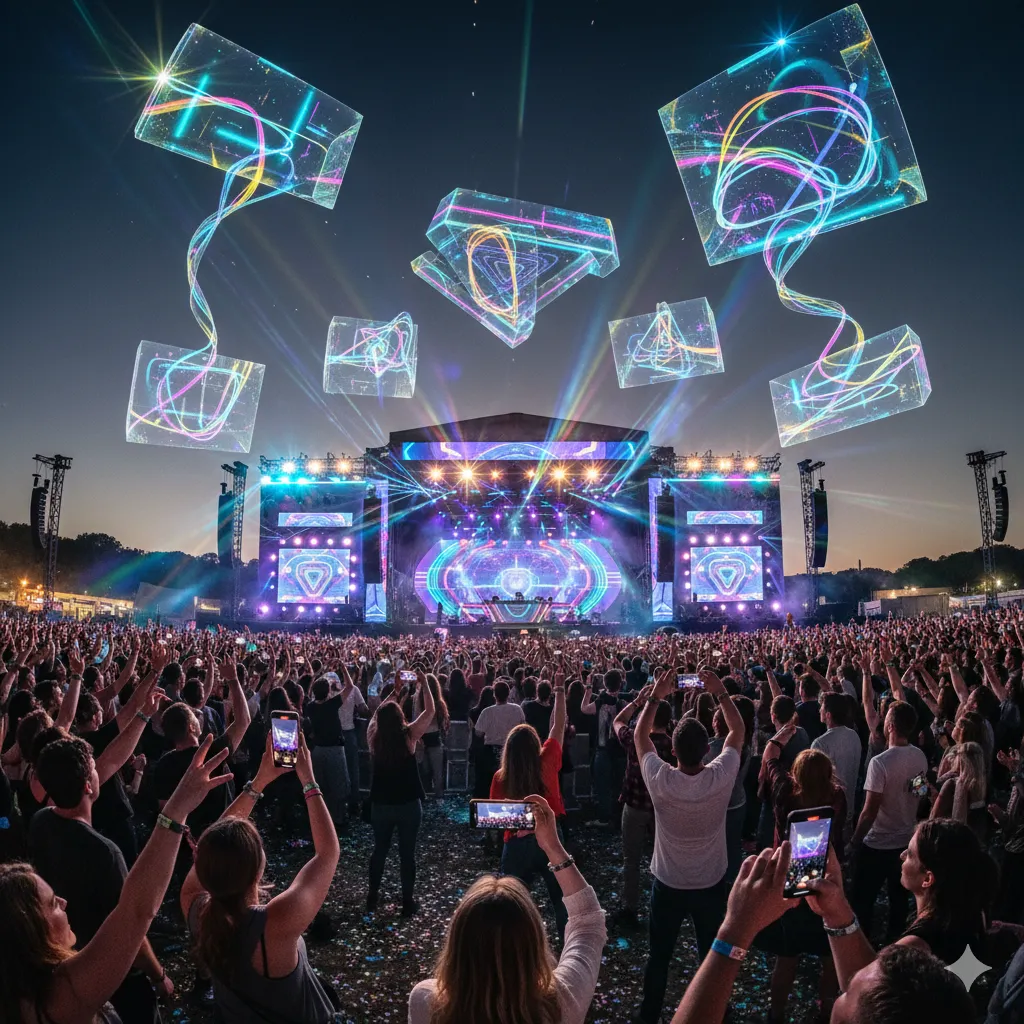
The roar of the crowd, the bass vibrating through the ground, the dazzling light shows—the core elements of the festival experience are timeless. But a new technological wave is washing over festival grounds across the globe, promising to elevate this experience from memorable to truly magical. Augmented Reality (AR) and Virtual Reality (VR) are no longer concepts from science fiction; they are actively reshaping how we engage with live music, art, and culture. From an exclusive virtual front-row seat to interactive art installations that spring to life through your phone, immersive technology is adding incredible new layers to the festival experience.

This post will explore the exciting ways AR and VR are transforming festivals, looking at real-world case studies, the tangible benefits for both attendees and organizers, the challenges of implementation, and what the future holds for this electrifying fusion of tech and live entertainment.

Pioneers of the Immersive Festival: Case Studies

Some of the world’s most iconic festivals have already embraced immersive technology, offering a glimpse into the future of live events.

Coachella: The AR Playground

Coachella has consistently been at the forefront of integrating technology into its desert landscape. In recent years, the festival has turned its livestream into a spectacle of its own with broadcast AR. During the 2023 festival, artists like Gorillaz and Bad Bunny had their performances enhanced with stunning AR visuals for the millions watching at home, making the digital experience almost as compelling as being there in person.

On the ground, Coachella has collaborated with brands to create unique AR activations. The “Coke Studio” experience, for example, transported attendees into the world of virtual artist Yameii Online. Through a combination of massive LED screens and a WebAR application on their own phones, fans could interact with characters from Yameii’s world, blurring the lines between the physical and digital stages. These initiatives don’t just entertain; they create shareable, buzz-worthy moments that extend the festival’s reach far beyond its physical location.

Tomorrowland: Building Virtual Worlds

Tomorrowland, the Belgian electronic dance music behemoth, took a monumental leap into VR out of necessity during the global pandemic. They launched “Tomorrowland Around the World,” a fully digital festival that was far more than a simple livestream. It was a meticulously crafted virtual island, featuring multiple stages, breathtaking visual effects, and DJ performances filmed on green screens and integrated into this new world. Fans could “attend” from home, creating avatars and exploring the digital festival grounds.

Building on this success, Tomorrowland introduced “The Great Library of Tomorrow,” a one-hour VR experience in Barcelona. This ticketed event allows visitors to explore the rich lore and thematic worlds of the festival through VR headsets, extending the brand’s presence and creating a new revenue stream completely independent of the main festival. Tomorrowland has proven that VR can be both a powerful substitute and a compelling complementary experience.

The Benefits of an Immersive Festival Experience

Integrating AR and VR into festivals offers a wide array of advantages for everyone involved.

  • For Attendees:
    • Enhanced Engagement: AR can turn passive spectators into active participants. Scavenger hunts for digital art, interactive stage effects controlled by the crowd, or AR portals to secret stages create a more gamified and engaging environment.
    • Accessibility: VR allows fans who are unable to attend in person due to geographical, financial, or physical limitations to experience the festival in a deeply immersive way.
    • Richer Information: AR overlays can provide real-time information about artist schedules, stage locations, and even friends’ locations, making festival navigation easier and more intuitive.
  • For Organizers and Artists:
    • Expanded Reach: Virtual tickets and immersive livestreams open up festivals to a global audience, creating a new and potentially massive revenue stream.
    • Sponsorship Opportunities: AR and VR provide a creative and high-impact platform for brand activations that are far more engaging than a simple logo on a banner.
    • Valuable Data: These technologies can provide organizers with incredible insights into attendee behavior, such as which stages are most popular, how crowds move through the festival grounds, and what installations attract the most interaction.

The Challenges on the Road to a Virtual Future

Despite the immense potential, implementing AR and VR on a festival scale is not without its hurdles.

  • Technical Infrastructure: The biggest challenge is connectivity. Tens of thousands of people in one location puts an enormous strain on Wi-Fi and cellular networks, which are essential for most AR experiences.
  • High Costs: Developing high-quality, stable AR and VR content is expensive and requires specialized skills. The hardware for VR experiences, such as headsets, also represents a significant investment.
  • User Adoption: While many festival-goers are tech-savvy, there can be a learning curve. Experiences need to be intuitive and easy to access, as attendees won’t want to spend precious festival time troubleshooting an app.
  • Content is Key: For these technologies to be successful, they must offer real value. A gimmicky AR filter will be quickly forgotten, but an immersive experience that deepens a fan’s connection to an artist or the festival itself will have a lasting impact.

The Future is a Hybrid Experience

So, what’s next? The future of festivals isn’t a complete replacement of the physical with the virtual. Instead, we are heading towards a hybrid model, where the digital and physical worlds are seamlessly intertwined.

Imagine pointing your phone at a stage and seeing not only the artist but also lyrics floating in the air, or spectacular digital creatures dancing alongside them. Picture being able to buy a virtual ticket that gives you access to a 360-degree VR stream from the front row, or even lets you “stand” on stage with the DJ.

As 5G networks become more widespread and AR glasses become more common, the barriers to entry will lower, making these experiences more accessible and reliable. The festival of tomorrow will be a multi-layered reality, offering a personalized, interactive, and endlessly shareable experience for everyone, whether they are in the crowd or on the couch. The beat goes on, but now it echoes in more dimensions than ever before.

Most Popular

A New Stage: How Digital Festivals Are Redefining Cultural Events

For generations, the concept of a festival has been intrinsically tied to a physical place: a muddy field, a sun-drenched desert, a historic city square. It was about the collective energy of a crowd, the reverberation of bass in your chest, and the serendipitous encounters that transform a series of performances into a rite of passage. Then, the world pressed pause, and out of necessity, a new stage was built—one constructed from pixels, code, and fiber optic cables. The digital festival was born.

Initially seen as a temporary substitute, the virtual festival has rapidly evolved into a distinct and powerful cultural format. It is redefining how we create, consume, and connect with art and music, forcing us to question the very essence of what a shared experience can be. This evolution isn’t about replacing the in-person event, but rather about creating a new, parallel universe of cultural engagement. By comparing the two realms, we can better understand the unique opportunities and inherent limitations of this new frontier.

In-Person vs. Virtual: A Tale of Two Experiences

To appreciate the rise of digital festivals, we must first understand how they differ from the traditional model. The experience is not simply a livestream; it’s a fundamental rewiring of the festival DNA.

Atmosphere and Community:

  • In-Person: The magic of a physical festival is tangible. It’s the spontaneous roar of the crowd, the shared awe of a sunset performance, and the unspoken camaraderie forged while waiting in line. This collective effervescence—the feeling of being part of something larger than yourself—is powerful and difficult to replicate.
  • Virtual: Digital festivals foster a different kind of community—one that is global, borderless, and connected through chat windows, comment sections, and shared virtual spaces. While it lacks physical immediacy, it offers a surprisingly intimate connection, allowing fans from opposite sides of the world to share a moment in real-time. Events like Tomorrowland’s “Around the World” used intricate 3D environments to give attendees a sense of shared space and exploration.

Accessibility and Inclusivity:

  • In-Person: Traditional festivals are inherently exclusive. They are limited by geography, ticket price, travel costs, physical ability, and venue capacity. For many, attending a dream festival is simply not feasible.
  • Virtual: This is where digital festivals unequivocally shine. They demolish barriers to entry. Anyone with a stable internet connection can attend, opening up world-class cultural events to a global audience. This democratization of access allows people with disabilities, financial constraints, or family commitments to participate in events they would otherwise miss.

The Sensory Experience:

  • In-Person: A live festival is a full-body sensory assault—the smell of food stalls, the feeling of the ground vibrating, the visual spectacle of lights and art. It is an all-encompassing, and sometimes overwhelming, physical experience.
  • Virtual: The experience is primarily audiovisual and mediated through a screen. However, this limitation breeds innovation. Artists and organizers can create experiences impossible in the real world. Think of Travis Scott’s concert within the video game Fortnite, where the virtual landscape warped and changed with the music, creating a psychedelic, interactive spectacle for millions. This is not just watching a concert; it’s stepping inside it.

The Unlocked Opportunities of the Digital Realm

Beyond simply replicating the live experience, digital festivals present entirely new opportunities for artists, organizers, and audiences.

1. A New Canvas for Creativity: The digital space is a playground without physical limitations. Artists are no longer bound by stage size, gravity, or safety regulations. Using augmented reality (AR), virtual reality (VR), and game engine technology, they can build immersive worlds, design interactive narratives, and allow the audience to influence the performance. This transforms passive viewership into active participation, creating entirely new art forms that are a hybrid of concert, video game, and immersive theatre.

2. Global Reach and Rich Data Insights: While a physical festival might host 200,000 people, a digital version can reach millions. This global reach is a massive opportunity for branding and audience building. Furthermore, digital platforms provide organizers with a treasure trove of data. They can see which artists had the most engaged audience, how long people “stayed” at a virtual stage, and what content was most shared. These insights are invaluable for future programming and tailoring experiences to audience preferences in a way that is impossible with anonymous physical crowds.

3. Sustainability and New Revenue Models: Digital festivals have a significantly smaller carbon footprint, eliminating the need for mass travel, on-site waste, and vast energy consumption. This aligns with a growing demand for more environmentally conscious entertainment. Economically, they open doors to new revenue streams, including tiered digital tickets (basic stream vs. VR backstage pass), virtual merchandise (like avatar skins), and targeted digital sponsorships.

The Inherent Limitations of the Virtual Stage

Despite the innovation, the digital format faces significant challenges that prevent it from completely supplanting the real thing.

1. The Battle for Attention: In a world of endless digital content, “Zoom fatigue” is real. A virtual festival is not just competing with other festivals; it’s competing with Netflix, social media, and every other tab open on a user’s browser. Keeping an audience captivated for hours through a screen, without the physical commitment of being on-site, is an immense challenge.

2. The Absence of Spontaneity: Some of the most cherished festival memories are unplanned: discovering a new band on a small stage, making friends with your campsite neighbors, or getting lost in an art installation. The curated, on-demand nature of many digital events can strip away this element of serendipity and adventure.

3. Technical and Monetization Hurdles: The experience is entirely dependent on technology. A poor internet connection, server crashes, or device incompatibility can ruin the event for a user. Furthermore, the industry is still grappling with how to effectively monetize digital events. The perceived value of a digital ticket is often lower than a physical one, making it difficult to replicate the revenue of a traditional festival.

Conclusion: The Dawn of the Hybrid Era

The rise of digital festivals has not signaled the end of in-person events. Instead, it has expanded our definition of what a festival can be. We’ve learned that community can be forged through fiber optics as well as in fields, and that immersion can be created with code as effectively as with concrete and steel.

The future is not a binary choice between physical and virtual. It is hybrid. We will see festivals offering a physical ticket for the traditional experience and a digital pass for a global audience, with exclusive online content and interactive features. This hybrid model combines the accessibility and creative freedom of the digital world with the irreplaceable, tangible magic of the live experience, creating a more inclusive, sustainable, and innovative future for cultural events worldwide.